Undercook it and you’re nervous. Overcook it and dinner’s dry, tough, and disappointing. A meat thermometer is the simplest tool that fixes both problems—but only if you use it correctly.
This guide isn’t just rules and charts. It’s real kitchen experience: where to insert the probe, when to check, how fast reads actually work, and the most common mistakes that quietly ruin otherwise good meals.
Why a meat thermometer matters (more than recipes)
Recipes lie.
Not on purpose—but because thickness, starting temperature, pan heat, and ovens all vary.
A thermometer tells you:
- When food is safe to eat
- When it’s actually done, not “probably done”
- When to stop cooking before it dries out
If you cook meat even a few times a week, this is one of the highest ROI tools in the kitchen.
The most important rule: where you place the thermometer
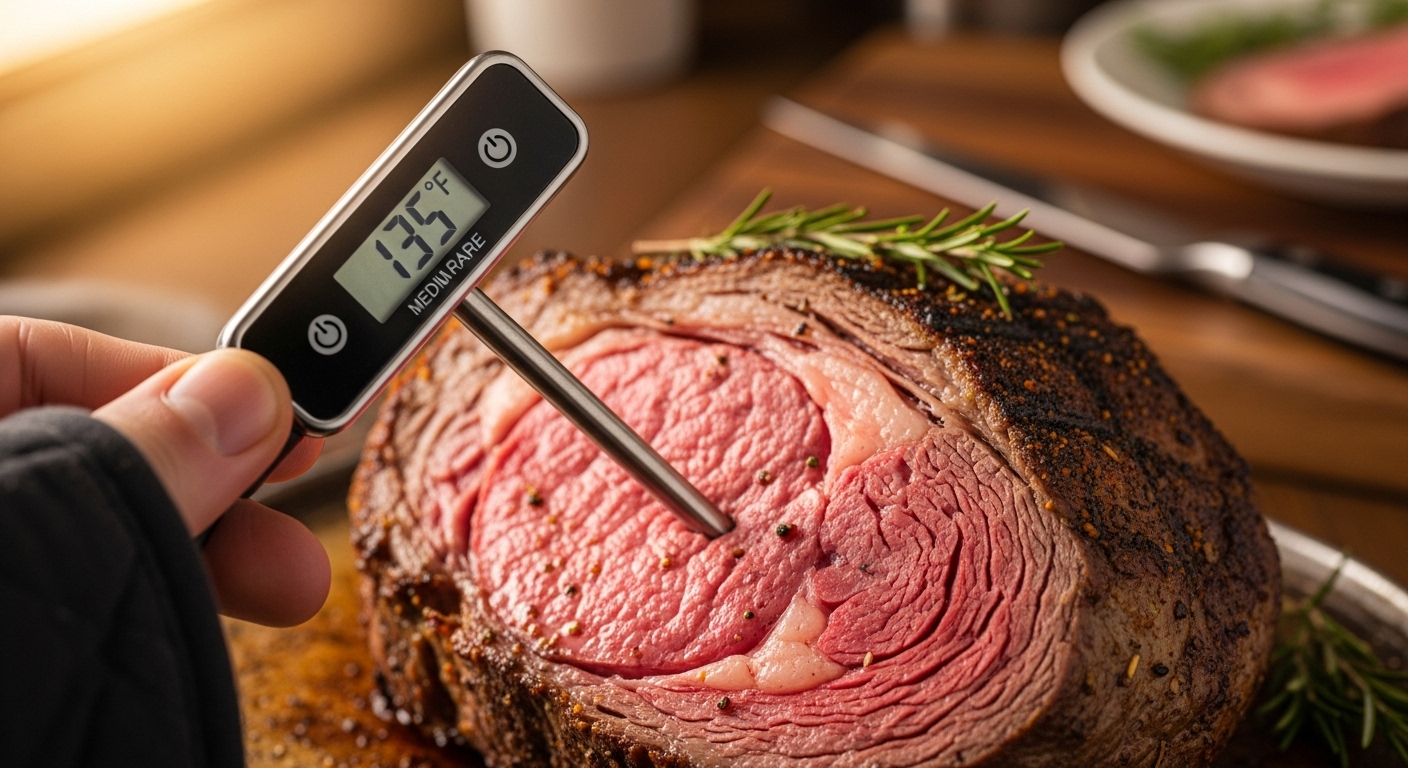
Always measure the thickest part
- Avoid bones (they conduct heat and give false high readings)
- Avoid fat pockets (they heat differently)
- Aim for the center of the meat
Bad placement = wrong temperature, even with a great thermometer.
For different foods:
- Steaks & chops: insert from the side, toward the center
- Chicken breasts: thickest end, straight into the middle
- Whole chicken/turkey: deepest part of the breast and inner thigh (check both)
- Burgers: center from the side, not from the top
If you’re unsure, check two spots—that alone prevents most disasters.
Safe internal temperatures (simple & practical)
These are widely accepted safe minimums. You don’t need to memorize them—just know the patterns.
- Chicken & turkey (all parts): 165°F / 74°C
- Ground meat (beef, pork): 160°F / 71°C
- Whole cuts of beef, pork, lamb: 145°F / 63°C + rest
- Fish: 145°F / 63°C (or flakes easily)
Pro tip: For whole cuts, safety + juiciness often come from resting, not cooking higher.
The secret most people miss: carryover cooking
Meat keeps cooking after you remove it from heat.
What that means in real life
- Steaks can rise 5–10°F
- Large roasts can rise 10–15°F
- Poultry rises less, but still some
How not to overcook:
Pull meat off heat when it’s:
- 5°F below target for small cuts
- 10–15°F below for large roasts
Let it rest. The temperature finishes climbing while juices redistribute.
This single habit fixes dry meat more than any seasoning trick.
Fast-read vs probe thermometers (and when to use each)
Instant-read (fast-read) thermometers
Best for:
- Steaks
- Chicken breasts
- Fish
- Burgers
How to use:
- Insert → wait 2–5 seconds → read → remove
- Don’t leave it in while cooking (unless designed for it)
Leave-in probe thermometers
Best for:
- Roasts
- Whole chicken/turkey
- Smoking or slow cooking
How to use:
- Insert before cooking
- Leave it in the whole time
- Set an alert slightly below final temp
If you cook roasts often, probes reduce stress dramatically.
Common mistakes that ruin dinner (and how to avoid them)
❌ Checking too early
Cold centers give misleading low readings.
Wait until food looks close to done, then check.
❌ Hitting bone or pan
Bone = false high
Pan contact = wildly inaccurate
Always reposition if the reading seems “off.”
❌ Only checking one spot
Large or uneven cuts cook unevenly.
Check at least two areas.
❌ Cooking “to the chart,” not to rest
Pull early. Rest properly.
This is how restaurants get juicy results.
How to use a thermometer without losing heat
Especially important for ovens and grills.
- Open the oven once, check fast
- Insert thermometer quickly
- Close heat source immediately
Lingering with the door open does more damage than checking temp itself.
My real-world workflow (simple & reliable)
This is how many experienced home cooks do it:
- Cook until food looks almost done
- Insert thermometer in thickest part
- If it’s 10°F below target, start watching closely
- Pull meat slightly early
- Rest uncovered (or loosely tented)
- Eat confident, juicy food
No guessing. No cutting meat open. No panic.
Do you need a meat thermometer?
If you:
- Cook chicken often
- Care about juicy steaks
- Grill or roast
- Want consistent results
Then yes—absolutely.
It’s not about being fancy.
It’s about removing uncertainty from cooking.
Final takeaway
A meat thermometer doesn’t make you a better cook by itself.
Using it correctly does.
- Place it right
- Know when to check
- Pull early and rest
- Trust temperature, not time
That’s how you stop ruining dinner—and start nailing it.