Steam mops feel like a cheat code for cleaning: no chemicals, fast drying, and floors that look (and feel) fresher. But used the wrong way, steam can dull finishes, loosen glue, or warp boards. Used the right way, it’s one of the safest, simplest cleaners in your home.
This guide shares real-world experience—what works, what doesn’t, and how to avoid the mistakes that quietly ruin floors.
First: what steam mops actually do
Steam mops clean by:
- Heating water into steam (high temperature, low moisture)
- Loosening grime and killing many germs
- Lifting dirt into the microfiber pad (not pushing it around)
They are not deep scrubbers for thick grease and not universal for every floor type.
Floor compatibility (this matters more than anything)
✅ Safe (when used correctly)
These floors usually handle steam well if they’re sealed and in good condition:
- Ceramic tile
- Porcelain tile
- Sealed stone (granite, slate—sealed only)
- Vinyl plank / LVP (check manufacturer guidance)
- Linoleum (modern, well-installed)
How to tell if a floor is sealed:
Water beads on the surface instead of soaking in.
⚠️ Use with caution
- Sealed hardwood (engineered or solid):
OK only on lowest steam setting, quick passes, no lingering. - Laminate:
Risky if seams aren’t perfectly sealed. Steam + seams = swelling over time.
If you see bubbling, lifting edges, or dull patches—stop immediately.
❌ Do NOT steam mop these floors
This is the “expensive mistake” list:
- Unsealed hardwood
- Waxed floors
- Cork
- Unsealed stone
- Older laminate with visible seams
- Loose or damaged flooring
Steam + moisture + heat = damage that shows up weeks later.
Water tips (simple, but important)
Use distilled water if you can
Especially if you have hard water.
Why it matters:
- Prevents mineral buildup inside the mop
- Reduces white residue on floors
- Keeps steam output consistent
Tap water won’t ruin your floor—but it shortens the life of the mop.
Don’t overfill the tank
More water ≠ better cleaning.
Overfilling can:
- Cause dripping instead of steaming
- Leave floors too wet
- Increase risk on sensitive surfaces
Follow the fill line. Always.
How to steam mop correctly (step-by-step)
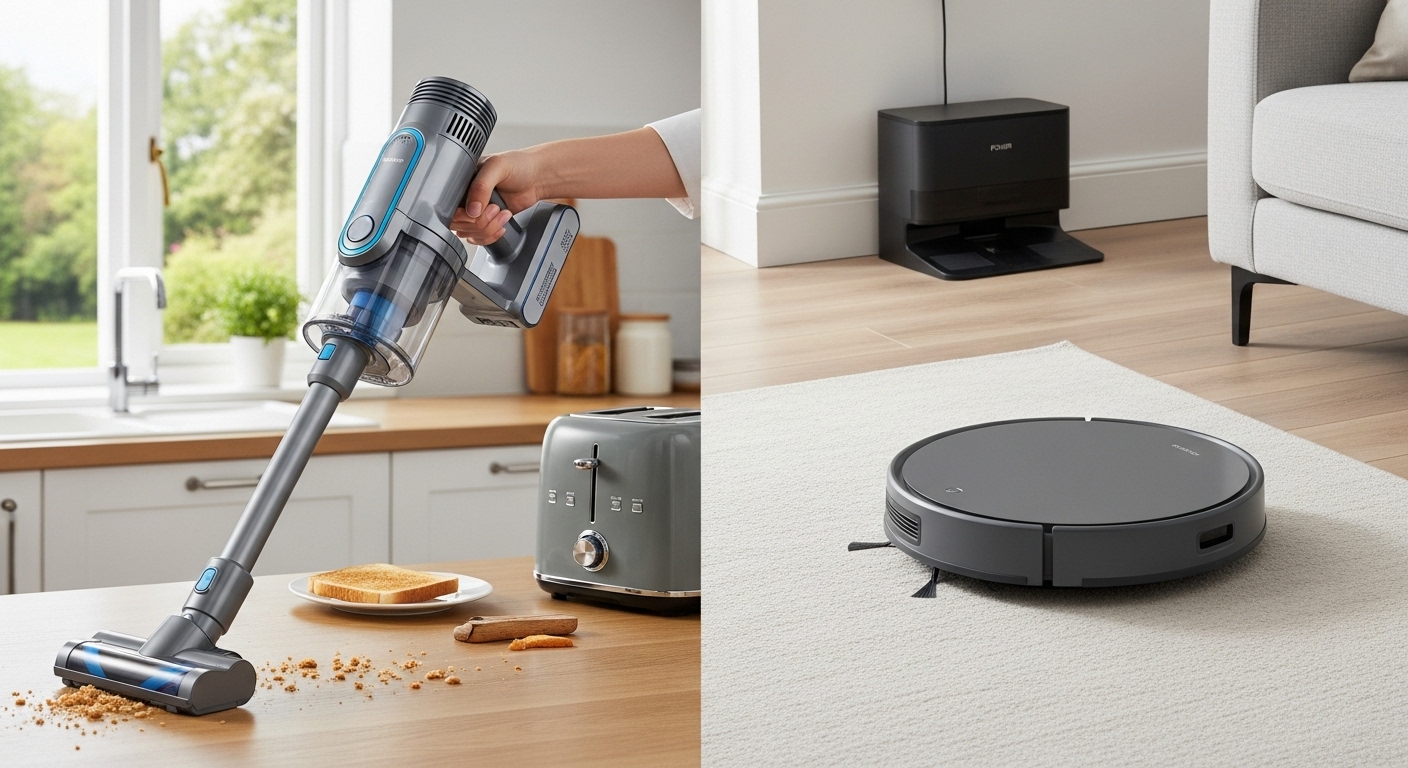
1. Vacuum or sweep first
Steam mops are not dirt collectors.
If crumbs or grit are on the floor, steam turns them into muddy streaks.
This one step makes the biggest difference in results.
2. Start on the lowest steam setting
You can always increase steam. You can’t undo damage.
Especially important for:
- Wood
- Laminate
- Vinyl plank
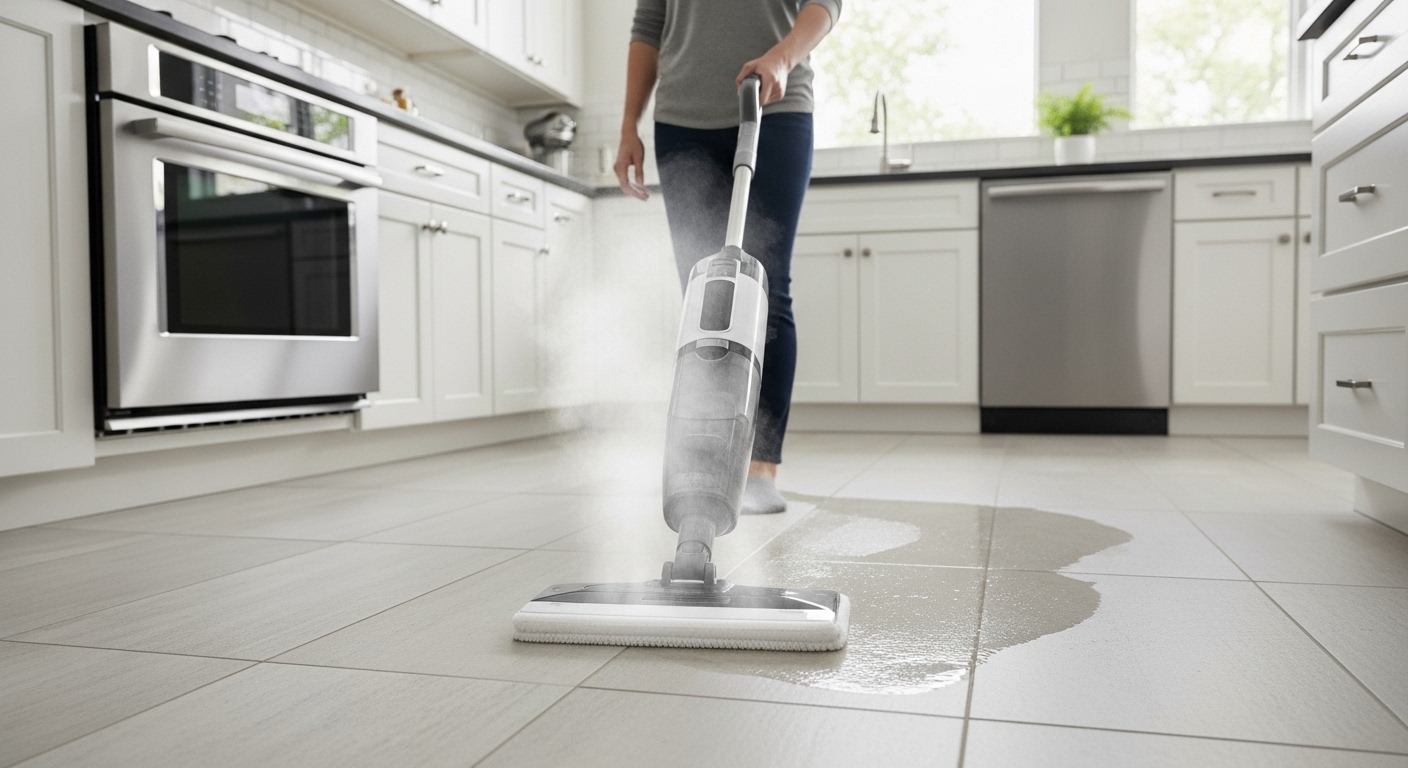
3. Keep the mop moving
Think “paintbrush,” not “iron.”
- Slow, steady passes
- No standing in one spot
- Overlap slightly, then move on
If you pause, lift the mop head.
4. Let the microfiber pad do the work
If a stain doesn’t lift:
- Don’t hold steam there
- Make a second pass
- Pre-spot clean stubborn areas
Pads matter more than steam pressure.
5. Change pads when they’re dirty
A saturated pad:
- Smears dirt
- Leaves streaks
- Smells bad
For larger areas, expect to swap pads mid-clean.
The “DON’T DO THIS” list (learned the hard way)
❌ Don’t leave the steam mop parked on the floor
❌ Don’t use steam to “fix” sticky spills—wipe first
❌ Don’t steam mop floors with lifting edges or cracks
❌ Don’t skip vacuuming first
❌ Don’t use scented additives or chemicals in the tank
❌ Don’t assume all “wood-look” floors are steam-safe
If the manual says “no steam,” believe it.
How often should you steam mop?
More is not better.
- Tile / sealed stone: 1× per week (or as needed)
- Vinyl / laminate: every 1–2 weeks
- Sealed hardwood: occasional use only
For daily messes, use:
- Dry microfiber mop
- Light damp mop (not steam)
Steam is a reset, not a daily habit.
Signs you’re using too much steam
Stop if you notice:
- Floors staying wet for more than a minute
- Cloudy or dull finish
- Edges lifting or curling
- Musty smell afterward
These are early warnings—don’t ignore them.
My real-world rule of thumb
If you wouldn’t:
- pour hot water on it
- leave it damp for 5 minutes
Then you shouldn’t steam mop it.
Steam mops are powerful—but precision matters.
Final takeaway
Used correctly, a steam mop is:
- Safe
- Chemical-free
- Fast
- Satisfying
Used carelessly, it’s one of the fastest ways to damage floors.
Vacuum first.
Use low steam.
Keep it moving.
Know your floor.
That’s the difference between clean floors and expensive regret.